This article originally ran in New York magazine on December 30, 2024.
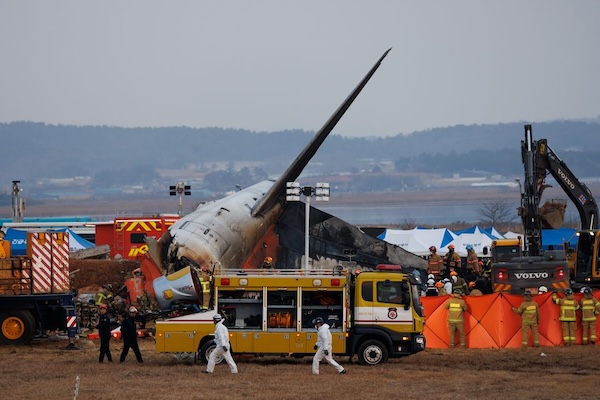
The Jeju Air 737 crash in South Korea on Sunday that killed all but two of the people onboard was in many respects as baffling as it was tragic. Given the scant information currently available, it’s hard even to piece together a coherent picture of what happened. “There’s a lot more questions than there are answers,” says Jim Brauchle, an aviation attorney who flew transport planes in the U.S. Air Force and now investigates air crashes as part of his law practice.
What we do know is that the plane was inbound from Bangkok, Thailand, to Muan, South Korea, with 175 passengers and six crew members when it apparently flew into a flock of birds and sucked at least one into an engine as it came in to land. Video taken from the ground appears to show a puff of smoke coming from the plane’s right engine, signaling a compressor stall that would have caused the engine to lose some if not all of its thrust.
The flight crew declared an emergency and aborted the landing. Around this time, the plane stopped transmitting its speed and location data via an automatic system called ADS-B, which lets the plane be tracked on websites like FlightRadar24. At the moment of its final transmission, the plane was a mile and half from the approach end of the runway and about 500 feet above the surface.
Continue reading 5 Unanswered Questions About the South Korea Plane Crash