Within weeks after the disappearance of MH370, many theories had been proposed, but one in particular had come to the fore: that one of the pilots had seized control of the plane and flown it on a prolonged and sophisticated murder-suicide mission into the southern Indian Ocean. While there have been a handful of known cases where pilots have flown their own plane into the ground, no one had ever before carried out a sophisticated, complicated, and aggressive plan to abscond with an airplane only to spend seven hours patiently waiting to die. But there seemed no other way to easily explain the sequence of events that emerged from the Inmarsat data. What would such a person be like, psychologically? What kind of traces would they leave behind in their social media, in their personal photographs and work records, and in the memories of those who knew them? In today’s episode we turn our attention to Captain Zaharie Ahmad Shah and First Officer Fariq Abdul Hamid and take stock of the evidence.
Continue reading Deep Dive: MH370 Episode 9: The PilotCategory: Aviation
Deep Dive: MH370 Episode 8: Surface Search
From the first day MH370 went missing, it was the subject of an intense surface search. Planes, ships and satellites scoured millions of square kilometers of ocean. Not a single piece was ever spotted. In today’s episode we talk about how it went down, and what we might conclude from it. We also touch on a strange coda to the search, that involved an attempt to find the plane by listening for audible pings from the plane’s black boxes.
As we’ve previously discussed, at first everyone thought that the plane had crashed in the South China sea, under its original route to Beijing. At first this was a Search and Rescue mission, as authorities hoped that the plane might have ditched à la Miracle in the Hudson and some survivors could be rescued. But as time went by hope quickly faded.
Continue reading Deep Dive: MH370 Episode 8: Surface SearchDeep Dive: MH370 Episode 7: Frequency
On March 24, 2014, the Malaysian Prime minister made a shocking announcement: using a new kind of mathematical analysis, scientists at the British satellite communications company Inmarsat had determined conclusively that MH370 had flown into a remote area of the southern Indian Ocean. Because there are no islands in the area, there was no possibility that anyone on the plane could have survived. Therefore, all 239 passengers and crew must be dead. It was a stunningly sweeping conclusion to reach based entirely on a kind of mathematics that no one in the outside world knew the details of. But was it correct?
Up until that time it had seemed to me that the plane more likely went north. It seemed implausible that someone sophisticated and motivated enough to steal a plane so aggressively would do it just to die a protracted death. In fact I’d written twoarticles for Slate making that case. At the time, most people already thought the plane probably went south, so my editor had only let me write the articles after I’d promised that I would write an apology article if I turned out to be wrong. I thought it was worth it, so I said yes.
Continue reading Deep Dive: MH370 Episode 7: Frequency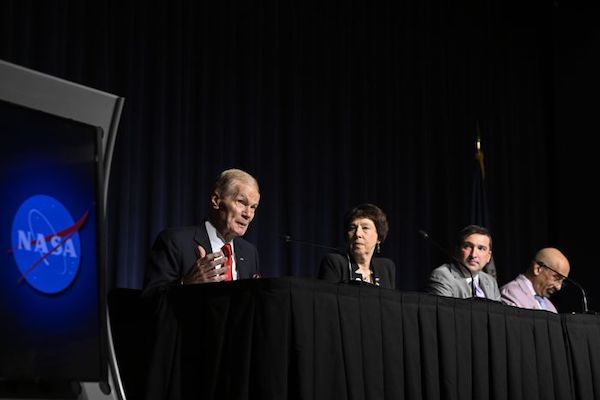
New York: Why NASA Wants Your UFO Videos
Last year, as the topic of UFOs was exploding back into the mainstream, NASA convened a panel of outside experts, the UAP Independent Study Team, to assess the unclassified evidence the government had collected. (UAP, for “Unidentified Anomalous Phenomena,” is the government-approved euphemism for UFO.) The group was a science-nerd murderers’ row whose purpose was to help the space agency handle a subject that had long attracted conspiracy theories — but which was also grounds for legitimate questions, considering the unexplained objects people had been observing and recording with increasing frequency. Heading the 17-member panel was Dr. David Spergel, a longtime Princeton professor of astrophysics who in 2021 took over as president of the Simons Foundation, a $5 billion nonprofit that supports basic science research. The group held a public meeting to discuss its work in May and released its final report last month. Among its top-line findings was that it had found no evidence of extraterrestrial UFOs, but that more data would be needed to settle the matter conclusively — including data from civilians who capture unidentified phenomena. It was a circumspect conclusion that, predictably, did little to satisfy true believers on either side of the UAP divide.
Intelligencer spoke with Spergel at his office at the Simons Foundation’s building near Madison Square, where he discussed why NASA got involved in the hunt for UFOs, what the odds of finding aliens are, and whether David Duchovny really believes that the truth is out there.
Why did NASA want to get involved in UFOs?
This starts with the Navy starting to declassify a bunch of images. The most famous one is the “Tic Tac” [filmed by a U.S. Navy fighter off the coast of San Diego], which is about 20 years old now. You look at those incidents and you say, “There’s something weird going on we don’t understand.” Then, having delved into the incident a bit, you realize that you wish they collected better data. What we’re left with is hard to interpret. NASA is a scientific agency. It’s charged with investigating the unknown. And the head of NASA announced, “We’re going to weigh in on this.”
After looking at evidence declassified by the Pentagon’s UAP organization, AARO (“All-domain Anomaly Resolution Office”), the panel concluded that most reported UAPs were either balloons, drones, or airplanes. What does that tell you?
The number of drones that are up at any given moment is enormous — they’re just monitoring fires and gas pipelines and helping farmers monitor crops. There’s also a ton of balloons. It turns out that small amateur balloons below a certain size didn’t have to be reported to the FAA. There’s probably some regulatory cleanup needed to make sure that balloons at low altitudes are not a threat to pilots.
Behind the Scenes on “Deep Dive: MH370”
It’s been a lot of fun working with the multi-talented Andy Tarnoff putting together our new podcast “Deep Dive: MH370,” which breaks down step by step the technical clues behind aviation’s greatest mystery. Here’s a peek behind the scenes:
Deep Dive: MH370
I’m pleased to announce that I’ve launched a podcast to delve into the evidence underpinning the greatest (and, I’d argue, most important) aviation mystery of all time. Andy Tarnoff and I are steadily working through the disappearance, deciphering what happened step-by-step. We’re currently on our third episode, which is the first to be both a video and an audio podcast. You can find all the episodes on our show page.
New York: In Russia, No One Is Safe in the Air
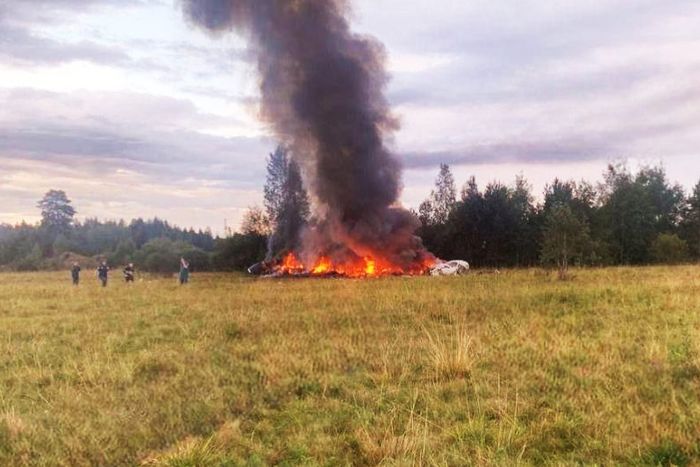
The apparent downing of the business jet carrying Wagner chief Evgeniy Prigozhin delivered a suitably brutal end to one of Putin’s most ruthless and effective deputies. It also underlined the extent to which Russia has been willing to set aside the niceties of aviation safety in the raw exercise of power.
Throughout the rest of the world, civil aviation is sacrosanct, a highly protected and regulated industry bound by international treaties enforced by powerful agencies like the Federal Aviation Administration in the United States and the European Union Aviation Safety Agency in the EU. Passenger safety is paramount. As a result, fatal accidents are exceedingly rare: The United State hasn’t had a fatal crash since 2009.
In 1978, the Soviet Union shot down an off-course Korean Air Lines 707, forcing it to crash-land on a frozen lake with the loss of two of the passengers and crew. Five years later, it shot down another off-course Korean Air Lines airliner over the Sea of Japan, killing all 269 aboard. In both cases, Soviet officials claimed that they were acting in self-defense, yet in both fighter jets had approached close enough to their targets to see that they were civilian airliners.
After the fall of the Soviet Union, its successor state, the Russian Federation, modernized its civilian aircraft fleet, and for a time safety improved. But after former KGB agent Vladimir Putin came to power in 1999, the Kremlin gradually returned to its old ways. In 2014, as a Russia-backed insurgency raged in the eastern part of Ukraine, a regular Russian army anti-aircraft unit shot down a Malaysian Airlines 777 en route from the Netherlands to Malaysia as it neared the border between Ukraine and Russia. All 298 passengers and crew were killed. To this day, it remains unclear why the plane was shot down, but in the aftermath Ukraine halted its air-force attacks on Russian ground units and its counteroffensive against the invaders stalled.
Continue reading New York: In Russia, No One Is Safe in the Air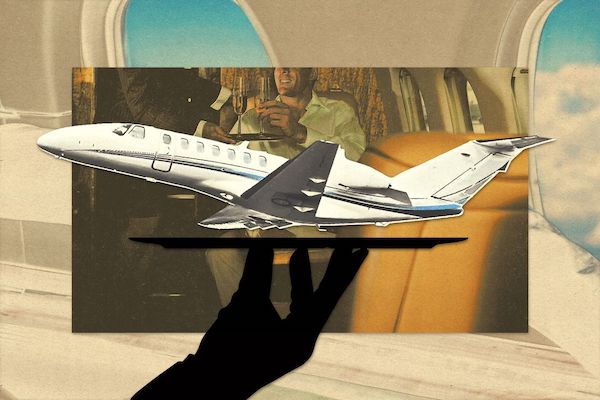
New York: The Airstocracy: Six things to know about flying with the superrich
It was all quite serene, at first. Out on a gated-off section of taxiway at Geneva Airport in May, a row of private jets (PJs, to fans) gleamed under the warm spring sun: Bombardier Challengers, Dassault Falcons, and Gulfstreams stood in a line beneath the distant verdure of the Alps. The display was part of the European Business Aviation Convention and Exhibition, a yearly confab that brings together manufacturers and service providers with their ultrarich customers in a politically neutral safe space. Velvet ropes and red carpets separated the curious onlookers from the VIPs being escorted aboard to tour the cabins and cockpits with swiveling leather club chairs, walnut veneer, and, in at least one case, a stateroom with an extra-long seat belt stretching across a full-size bed. The vibe was discreet, calm, befitting an environment designed to cosset the fortunate as they wafted through the upper reaches of the stratosphere.
Then, a hubbub of shouting and a rumble of footsteps. A hundred young climate protesters wearing orange vests like airport workers had broken through the fences and were racing toward the aircraft, juking past the employees who were trying to fend them off. Not all the manufacturers’ employees fought with equal vigor. “You really found out where people’s loyalties lay,” one told me later. “Some ran forward, and some cowered.” Amid the confusion, a few protesters managed to handcuff themselves to some of the planes’ landing gear, where they chanted and held signs reading “Private Jets Burn Our Future” and “Fuel Inequality.” In the end, police hauled off the protesters, and the trade show went on, albeit with a slightly shaky, post-traumatic skittishness.
The skirmish encapsulated the tensions that have begun to grip private aviation. At a time when income inequality has reached dizzying extremes, there has never been so much money pouring into an industry that’s become a byword for extreme luxury, nor has flying private enjoyed so much cultural resonance: stealing scenes in Succession and BlackBerry, infiltrating news headlines about Supreme Court justices, inspiring rap lyrics, and obsessing thirsty TikTokers. At the same time, it’s come under withering attack as a proxy for the self-destructive obliviousness of the megarich and become a symbol of how unfair and unsustainable their privilege is. With regulations tightening in several European countries and pressure building for more, it’s entirely possible that private flying’s sudden cultural ascendancy could help pave the way for its ultimate demise.
Continue reading New York: The Airstocracy: Six things to know about flying with the superrichNew York: When Flying Private Kills
As it took off from Dillant-Hopkins Airport in Keene, New Hampshire, on the afternoon of March 3, the Bombardier Challenger 300 business jet provided an apt illustration of why private flying is so popular among those who can afford it. Dana Hyde, a 55-year-old Beltway lawyer who had served in the Obama White House, had flown up from Virginia the day before with her husband, Jonathan Chambers, and their son Elijah to visit colleges in New England.
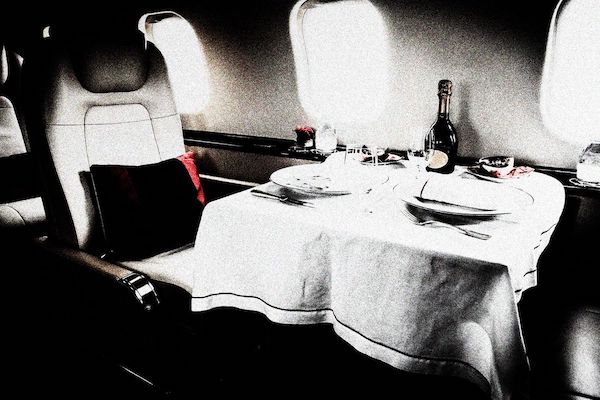
The three passengers were able to spread out in a cabin that accommodates up to 16. The trip, which would have taken more than eight hours by car, would be less than an hour, with no hassles at airport security, waiting in line to board, or juggling their schedules to match the airline’s — they just told the pilots when they wanted to go, where they wanted to go, hopped on, and left. After a brief delay due to an aborted takeoff attempt, the plane lifted off from Keene at 3:36 p.m., according to publicly available location data. It was a good day for flying: Winds were calm, the temperature a seasonally mild 44 degrees. Given the jet’s cruising speed, the family could expect to be on the ground at Leesburg Executive Airport by 4:30 p.m. From there, it would be a 30-minute drive to their home just across the state line in the affluent riverside village of Cabin John, Maryland.
A two-day private jet trip like this costs about $25,000 to book from a charter company, but the family had the plane at its disposal because Chambers is a partner in Conexon, the consulting company that owns the plane. A onetime Republican staffer for the Senate Committee on Commerce, Science and Transportation, Chambers had joined the Federal Communications Commission in 2012 and assisted in rewriting the rules for how the government helps subsidize telephone and cable services in rural communities. In 2016, he left government service and co-founded Conexon to help cable companies take advantage of the rules he had written.
Hyde had an even more impressive résumé. Born to a single teenage mother, she grew up in rural eastern Oregon, then attended UCLA and got her law degree at Georgetown. From there, her star rose quickly. She worked as a White House special assistant during the Clinton administration, then served on the 9/11 Commission. After a spell at the State Department, she was picked by the Obama administration to head the Millennium Challenge Corporation, an independent agency set up during the Bush years to fight global poverty by funding projects in countries that follow free-market economic policies. Having come from modest means herself, “working to fight global poverty” was important to her, Hyde said at her Senate confirmation hearing, but so was efficiency. “I believe in data-driven, cost-effective policies. I want the American people to always get their money’s worth from anything their government does on their behalf,” she testified. Confirmed unanimously, she steered the agency and its billion-dollar budget from 2013 until 2017. She thereafter worked as a partner at a Jerusalem-based venture-capital firm and was co-chair of the Aspen Partnership for an Inclusive Economy.
A gentle breeze was blowing from the south as the plane rose from the 6,000-foot runway. It banked to the left as it climbed over the foothills of the White Mountains, then leveled its wings to follow the course of the Connecticut River southward. What happened next can be pieced together from a report released a month later by the National Transportation Safety Board.
Continue reading New York: When Flying Private KillsNew York: Why Elon Musk’s SpaceX Doesn’t Mind Its Rocket Blew Up
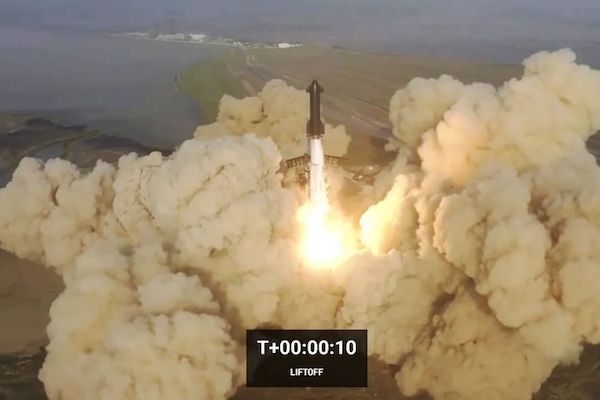
It was not, as they say in the space-launch business, nominal. Four minutes into Thursday’s launch of the giant SpaceX Starship, the unmanned rocket blew up at an altitude of 18 miles. The 390-foot-high launch vehicle, the largest and most powerful anyone has ever attempted to launch into space, has long been a lynchpin of Elon Musk’s ambitions to someday colonize Mars, and its failure interrupted what had been a remarkable string of successes for SpaceX. Yet, as the fireball ballooned across the sky the mood on the ground was anything but somber, as the crowd that had gathered to watch erupted in whoops and cheers. “Congrats @SpaceX team on an exciting test launch of Starship!” Musk tweeted in the aftermath. “Learned a lot for next test launch in a few months.”
Continue reading New York: Why Elon Musk’s SpaceX Doesn’t Mind Its Rocket Blew Up