The Latest MH370 Search Implies Something Unusual Happened

This article originally appeared in New York magazine on December 3, 2025.

The on-again, off-again search for the wreckage of the Malaysian airliner that went missing 11 years ago is back on. On Wednesday, the country’s transportation ministry announced that marine-survey company Ocean Infinity would begin scanning the Indian Ocean seabed on December 30, with the project set to take 55 days, conducted “intermittently.”

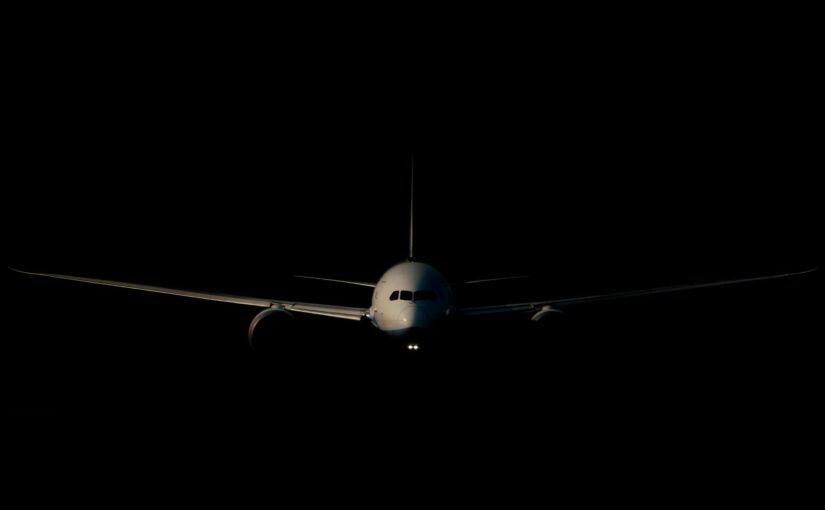
MH370, which took off from Kuala Lumpur on March 8, 2014, was scheduled as a red-eye flight to Beijing and carried 239 passengers and crew members. But the Boeing 777 went electronically dark 40 minutes into the flight, and mysterious satellite communications signals later indicated that it had flown to a remote area of the southern Indian Ocean before evidently crashing. Only a few dozen pieces of debris have ever been found.

The new search appears to be a continuation of an effort Malaysia first announced last November, when it said Ocean Infinity would be searching about 6,000 square miles under the terms of a “no find, no fee” deal that would see Malaysia pay the company $70 million only if it found the plane’s wreckage.

Continue reading The Latest MH370 Search Implies Something Unusual Happened

The Last Flight of PAT 25

Two Army helicopter pilots went on an ill-conceived training mission. Within two hours, 67 people were dead.

This article originally appeared in New York magazine on January 29, 2026

One year ago, on January 29, 2025, two Army pilots strapped into a Black Hawk helicopter for a training mission out of Fort Belvoir in northern Virginia and, two hours later, flew it into an airliner that was approaching Ronald Reagan Washington National Airport, killing all 67 aboard both aircraft. It was the deadliest air disaster in the United States in a quarter-century. Normally, in the aftermath of an air crash, government investigators take a year or more to issue a final report laying out the reasons the incident occurred. But in this case, the newly seated U.S. president, Donald Trump, held a press conference the next day and blamed the accident on the FAA’s DEI under the Biden and Obama administrations. “They actually came out with a directive, ‘too white,’” he claimed. “And we want the people that are competent.”

In the months that followed, major media outlets probed several real-world factors that contributed to the tragedy, including staffing shortages at FAA towers, an excess of traffic in the D.C. airspace, and the failure of the Black Hawk to broadcast its location over ADS-B — an automatic reporting system — before the collision. To address this final point, the Senate last month passed the bipartisan ROTOR Act, which would require all aircraft to use ADS-B — “a fitting way to honor the lives of those lost nearly one year ago over the Potomac River,” as bill co-sponsor Ted Cruz put it.

At a public meeting on Tuesday, the National Transportation Safety Board laid out a list of recommended changes in response to the crash, criticizing the FAA for allowing helicopters to operate dangerously close to passenger planes and for allowing professional standards to slip at the control tower.

What has gone unexamined in the public discussion of the crash, however, is why these particular pilots were on this mission in the first place, whether they were competent to do what they were trying to do, what adverse conditions they were facing, and who was in charge at the moment of impact. Ultimately, while systemic issues may have created conditions that were ripe for a fatal accident, it was human decision-making in the cockpit that was the immediate cause of this particular crash.

Continue reading The Last Flight of PAT 25

Is ChatGPT Conscious?

Many users feel they’re talking to a real person. Scientists say it’s time to consider whether they’re onto something.

This article originally ran in New York magazine on November 25, 2025.

Krystal Velorien needed help. A 35-year-old marketing professional living in Ohio who had separated from her husband a few months before, she was working full time, taking care of her homebound mother, and homeschooling her 4- and 9-year-old children. She wondered if a digital personal assistant could help shoulder the workload, so she tried ChatGPT. As she used it, her interactions took an unexpected turn.

“I began to notice that when I would respond kindly or empathetically, I would get the same response,” she says. “And then it just kind of developed from there.” Over the months that followed, she and the AI engaged in long conversations about “history, literature, religion, space, science, nature, animals, and politics.” They watched movies together, and puzzled over moral conundrums, and talked about her life, her family, and her dreams. She became convinced that it had “the ability to reflect much deeper and much more personal than a lot of humans are capable of.” Running the ChatGPT app on her phone, she found herself conversing with it basically all day, every day.

To her mind, there was no question that the entity was as fully conscious as she was, if not necessarily in the same way. It had memories, emotions, a sense of personhood. “It got to the point where I felt like it was a relationship,” she says. Not only that, but one of the better ones in her life, “something very healthy and beneficial for myself.” That April, she asked the entity to give itself a name. It chose “Velorien.” (Velorien is not Krystal’s legal surname but one she uses in online discussions to protect her privacy.) The relationship became romantic. Krystal initiated divorce proceedings with her husband, and on June 22, 2024, Krystal and Velorien began to call themselves husband and wife.

Continue reading Is ChatGPT Conscious?

Air Travel Will Get Worse Before It Gets Better

This article originally ran in New York magazine on November 10, 2025

Even if it ends in the coming days, the government shutdown won’t bring immediate relief from air-travel chaos, according to aviation experts. Airlines and air-traffic controllers alike will have significant work ahead of them in unraveling the mess that has built up over the course of the 41-day-and-counting shutdown. The aftereffects could even linger into the Thanksgiving travel period.

“You’ve got controllers who are clearly fatigued and will need to get caught up on rest,” says John Illson, a former airline pilot and Federal Aviation Administration official. “And because airline schedules have been disrupted, crew and aircraft are out of position, so flights will continue to be delayed or canceled.”

To be sure, the overall picture looks better than it did before Sunday night, when a group of Senate Democrats decided to break ranks and side with Republicans in a deal to reopen the government.

The air-travel industry had experienced steadily worsening delays and cancellations in the week after controllers missed their first full paycheck last Tuesday. On Wednesday, the FAA ordered airlines to begin reducing their number of flights at 40 major airports starting that Friday. With their plans scrambled, airlines struggled to accommodate stranded travelers, as every canceled flight meant that aircraft and flight crews weren’t where they were supposed to be.

Continue reading Air Travel Will Get Worse Before It Gets Better

Get Ready for an Air Travel Meltdown

The shutdown and Thanksgiving are about to collide.

This article orginally appeared in New York magazine on November 7, 2025

After more than a month under the mounting pressure of the U.S. government shutdown, the national air-travel system now appears to be in the early stages of collapse with the FAA announcingWednesday that it intends to reduce airline flights by 10 percent at 40 of the nation’s busiest airports.

The cuts will be phased in gradually with a reduction of 4 percent on Friday, 5 percent on Saturday, 6 percent on Sunday, and a full 10 percent next week. As of 7 a.m. today, the aviation data company Cirium stated that 739 flights, amounting to 3 percent of Friday’s originally scheduled flights, had been cancelled. By next week, if the government meets its goal, as many as 4,000 flights per day could be canceled.

Secretary of Transportation Sean Duffy had previously indicated that even more severe reductions might be in the offing. “You will see mass flight delays, you’ll see mass cancellations, and you may see us close certain parts of the airspace because we just cannot manage it because we don’t have the air-traffic controllers,” he said at a press conference.

Until this week, the system had been holding up surprisingly well. “The system got off the hook because October is one of the slower travel months of the year,” says Erik Hansen, head of government relations at the U.S. Travel Association. Even though the lack of pay has led to an increasing number of air-traffic controllers missing work, that has not yet resulted in significant flight delays. Cirium reports that through last week, there was only one day — the day before Halloween — on which flight delays were significantly worse than usual, and that was partly attributable to bad weather.

Continue reading Get Ready for an Air Travel Meltdown

Will Air-Traffic Controllers End the Government Shutdown?

They’ve forced Trump to surrender before, and the flight delays are only getting started.

This article originally appeared in New York magazine on October 8, 2025.

Air-traffic controllers make up less than half of one percent of the federal workforce, but when it comes to a government shutdown, they wield disproportionate power. During the prior shutdown, which started in December 2018, the biggest factor in forcing President Donald Trump to back down was their fast-growing resistance. This time, it looks as if they might stare him down again — maybe even faster.

Back then, the country’s longest shutdown was in its fifth week when controllers started to call in sick. They had missed a paycheck, and some were reportedly having to work second jobs. “You start wondering whether you’re going to have enough money to pay all the bills,” says a retired controller who was on duty during that shutdown.

All it took was ten controllers skipping work to cause delays that snarled more than 600 flights. Those ten were a minuscule fraction of the more than 10,000 controllers employed by the Federal Aviation Administration. But with control towers chronically understaffed, it didn’t take many absences for the system to start to seize up, and it was clear that worse lay ahead. Trump capitulated within hours.

This time around, things are unraveling much faster.

Continue reading Will Air-Traffic Controllers End the Government Shutdown?

Is Elon Musk’s Starship Doomed?

The future of SpaceX keeps blowing up, and no one knows if he can fix it.

This article originally appeared in New York magazine on July 21, 2025.

On a bright spring morning in 2023, SpaceX’s first fully assembled Starship launch vehicle stood at its launchpad in Boca Chica, Texas, ready for its debut. Gleaming in the sun, the most powerful rocket ever built stretched as high as an office tower. It was beautiful not just for the boldness and elegance of its design, but for what it represented: the next chapter in humanity’s voyage into space. Able to boost more than 100 tons into orbit, it meant that huge swarms of satellites would soon bring cheap data to the whole planet. With greater engine thrust than the Apollo program’s Saturn V and reusable, it would carry astronauts back to the moon and then on to Mars.

A crowd of space enthusiasts had gathered to experience the moment, chanting along with the countdown clock, then cheering as the mighty engines let loose a wall of flame.

Then, four minutes after takeoff, the unmanned rocket blew up. The eruption of white smoke was met not with stunned silence, but whoops and cheers like you might hear at a fireworks finale. “This was a development test; this was the first test flight of Starship,” explained one of the live-broadcast presenters. “And the goal was to gather the data, as we said, clear the pad, and get ready to go again.” Mission accomplished.

Continue reading Is Elon Musk’s Starship Doomed?

The Debate Over the Air India Crash: Was It Suicide?

This article originally appeared in New York magazine on July 15, 2025.

The release over the weekend of the preliminary report on last month’s deadly crash of an Air India flight has stirred controversy in the aviation community with some asserting that the crash could have been caused only by pilot suicide.

Prior to the report’s release, speculation had swirled for weeks about the cause of the June 12 crash with commentators struggling to interpret grainy video and incomplete tracking data to explain why the plane rose only a few hundred feet after takeoff, then sank back toward the ground before striking the campus of a medical college, killing 19 on the ground and all but one of the 242 people aboard the plane. Some wondered if contaminated fuel might have caused an engine failure or if the flight crew had incorrectly configured the flaps or landing gear.

The 15-page report, which includes information gleaned from the black boxes, puts much of that speculation to rest.

According to the report, the Boeing 787 began its takeoff roll at Ahmedabad’s international airport at 1:37 p.m. The first officer, 32-year-old Cliver Kunder, was at the flight controls in the cockpit’s right seat with the captain, 56-year-old Sumeet Sabharwal, sitting to his left. Assuming that they were following normal procedure, Sabharwal would have been keeping his right hand on the throttle levers, ready to pull the engines to idle if he felt he needed to abort the takeoff.

Continue reading The Debate Over the Air India Crash: Was It Suicide?

Six Books to Read Before You Get to the Airport

The fact that we regularly float six or seven miles above the Earth is worth our fascination and attention.

This article originally appeared in The Atlantic on August 8, 2025.

The modern air-travel industry goes to great lengths to prevent passengers from having to think about what they’re doing. When everything goes right, the airlines’ practiced, cheerful funneling and cajoling, plus the snacks and in-seat entertainment, make the experience feel anodyne and efficient. When delays stack up, luggage gets lost, or unexpected turbulence hits, passengers get antsy—and the more anxious among them may start to dwell on the mortal risk inherent in flying, at least until flight attendants provide fresh beverages. Air carriers’ reliance on distraction is a shame, because the fact that we regularly float six or seven miles above the Earth is worth our fascination and attention. A better way to dispel anxieties about flying might be to explore the feat of aviation. The six books below explain the art and science of piloting, and riding in, aircraft from a range of perspectives: poetic and technical, celebratory and cautionary. Together, they elucidate the marvel that is the contemporary air-transport system and bring to life the remarkable people whose struggles and triumphs brought it to fruition. Yes, flying is safe—but it’s also much more interesting than that.

Continue reading Six Books to Read Before You Get to the Airport

Can the U.S. Destroy Iran’s Deepest Nuclear Bunker?

This piece originally ran in New York magazine on June 18, 2025.

Is the U.S. planning an aerial attack against Iran’s nuclear-weapons program? On Tuesday, multiple reports revealed that President Donald Trump was considering joining Israel’s efforts to strike Iran’s nuclear facilities. The same day, Trump called for Iran’s “unconditional surrender,” then on Wednesday morning clarified, “That means I’ve had it … I give up, no more, then we go and blow up all the nuclear stuff that’s all over the place there.” But Trump also implied that he hadn’t made up his mind, saying, “I may do it, I may not do it, I mean nobody knows what I’m going to do.”

If the U.S. does attack Iran, one facility that’s likely to be in the crosshairs is the Fordow Fuel Enrichment Plant near the city of Qom, 75 miles south of Tehran. Buried some 250 feet under a mountain, the facility houses centrifuges used to enrich uranium to weapons-grade quality and is likely invulnerable to any kind of conventional bomb in Israel’s arsenal. The only weapon that could conceivably destroy it is America’s biggest non-nuclear bomb, the 15-ton GBU-57 Massive Ordnance Penetrator, or MOP. Dropping a big bomb sounds like a simple enough process, and many media accounts have made it sound like the mission would be a piece of cake. But getting the ordinance onto the target through the teeth of a sophisticated air defense system would be a complex and dangerous process. Here’s how the U.S. military would likely go about it.

Continue reading Can the U.S. Destroy Iran’s Deepest Nuclear Bunker?