This story appeared in New York magazine’s Vulture section on March 30, 2026.
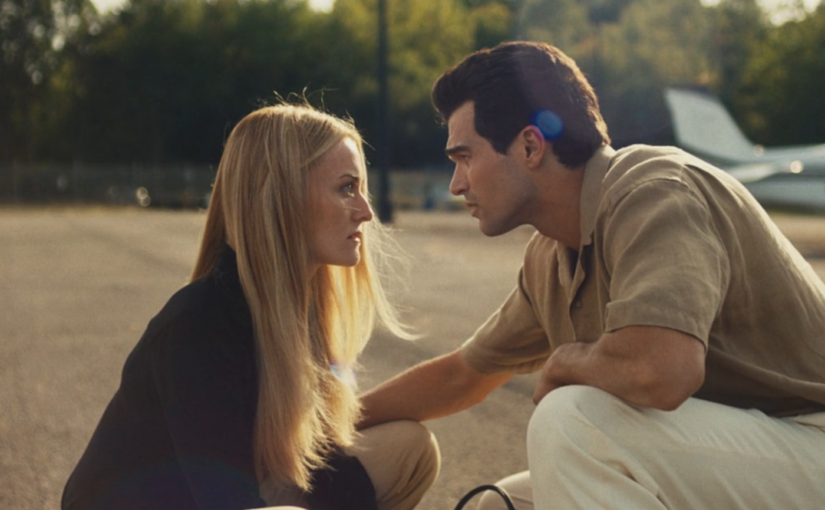
The FX miniseries Love Story, about the tempestuous relationship between John F. Kennedy Jr. and Carolyn Bessette, is bracketed by the story of their final, fatal flight to Martha’s Vineyard in 1999. The first episode begins with them boarding the plane and taking off on a summer afternoon; the final episode revolves around the events of that flight and its impact on their loved ones and the public. It’s a crucial episode, both in their real lives and in the plot of the show. But is it accurate? Well …
The show does get the rough outline of the incident right. John did indeed attempt to fly his personal Piper Saratoga from an airport in Caldwell, New Jersey, to Martha’s Vineyard and then to Hyannis, Massachusetts. Onboard with him were Carolyn and her sister Lauren. They took off at 8:40 p.m. on July 16 and headed east, following the Connecticut coast. Then, over the ocean west of Martha’s Vineyard, John became spatially disoriented and lost control. After the plane failed to arrive, search parties set out to look for them. The wreckage and the three bodies were found four days later.
While the overall arc of the narrative matches the details laid out in the official crash investigation carried out by the National Transportation Safety Board, much of what’s shown onscreen is creative license, since there was no cockpit voice recording of what happened during the flight. Other details are simply inaccurate. Here are the significant errors.
Wrong: John tried to get a flight instructor to come along with them.
In the show, when Carolyn arrives at the airport, she asks where the flight instructor is. John replies, “He couldn’t make it.”
It’s true that John often did ask flight instructors to fly with him. He needed the help. Despite having logged a considerable number of flight hours, he struggled to become a proficient aviator. Lately, he’d been training to fly under “instrument conditions,” which would have allowed him to operate the aircraft in clouds and haze, but he had gotten bogged down. He failed to complete the 11th lesson of the 25-lesson course on the first try and had to repeat it three times before finishing it and moving on. His instructor told investigators that he “had trouble managing multiple tasks while flying.”
But it’s not true that the flight instructor bailed on them. In fact, one had offered to join the flight, but John replied that “he wanted to do it alone,” according to crash investigators.
Wrong: They took off in daylight.
As they prepare to take off in the show, the sun is high in the sky, and later, when they’re en route to Martha’s Vineyard, the sun is still above the horizon. In reality, they didn’t take off until 8:39 p.m., 25 minutes after the sun had set.
John’s pilot license authorized him to fly at night, and flying after dark isn’t dangerous if the visibility is good. But as the show correctly depicts, John received a weather briefing that forecast hazy conditions, which can make it especially difficult to get your bearings at night. The instructor who had offered to ride along with John later told crash investigators that he wouldn’t have felt comfortable with John flying in the conditions that prevailed near Martha’s Vineyard that night.
Wrong: The plane flew into bad weather, with turbulence and sudden clouds that cut visibility to zero.
The problem wasn’t that they’d flown into rough weather, but that John had continued to fly into conditions in which he was unable to visually gauge the orientation of the aircraft.
It was already fully dark outside when he ran into trouble, with haze that made it impossible to make out the horizon. Spatial disorientation occurs when sensory information from the inner ear provides a powerfully misleading sensation of up and down. It can cause a pilot who’s actually flying upright to put the plane into a turn, mistakenly believing that he’s leveling the wings, and then to make the turn steeper still, until the plane is in a deadly high-speed dive without the pilot even realizing it. A major component of instrument training is learning to ignore that sensation and rely on the aircraft’s navigational instruments. It’s one of the first topics that John would have studied when learning to become a pilot.
Wrong: Alarms went off, red light filled the cockpit, and the dials on John’s instruments spun.
There was nothing wrong with the airplane that would have caused alarms to go off. All of the equipment was working properly. The compass would have swung slowly as the plane turned, not spun like a top, as it’s shown doing in the show.
Wrong: Carolyn was initially sitting in the back seat, but then looked at John in the front seat and decided to move forward to sit next to him.
The Saratoga has six seats in three rows. John was in the first row, in the pilot’s seat. Lauren and Carolyn were sitting in the second row, facing backward. As they were flying, Carolyn wouldn’t have been looking at John. There’s no evidence that she ever moved to the front seat, and given the tight confines of the plane’s cabin, it’s unlikely she would have done so.
Wrong: Carolyn knew John was panicking and tried to comfort him while maintaining a Zenlike calm.
Even if Carolyn had been sitting in the front and realized that something was going terribly wrong, there would have been no way for her to intuit that the problems were caused entirely by John’s confusion and rising panic.
More likely, she would have experienced the plane’s lurching flight path as disturbing and inexplicable. She would have felt an increase in g-forces pulling her into her seat and heard an unfamiliar sound of wind rushing loudly as the plane dived toward the waves. A more plausible reaction would have been What the hell is going on?
Wrong: After the crash is located and the bodies are recovered, John’s brother-in-law was told that spatial disorientation is like “being taken under by a wave.”
Disorientation isn’t an external force that overwhelms a person like a wave. It comes from within and is caused by a pilot who listens to his internal bodily sensations instead of relying on the aircraft instruments. John should have expected it, given his training.
Right: Carolyn’s mother asserts that John was responsible for the crash.
In the show, Carolyn’s mother, Ann Messina Freeman, says to John’s sister, Caroline Kennedy, “Some of the media are saying they crashed because Carolyn was getting her nails done. Delayed their takeoff. Not that your brother wasn’t equipped to fly at night and took off anyway, but that she held them back. Her vanity.”
The idea that the media blamed Carolyn for the crash is dramatic license. In reality, the media fawned over her in the aftermath of her death. The story about getting her nails done didn’t surface until 2003 (and it was supposedly a pedicure, not a manicure, as depicted in the show).
But responsibility for the accident did lie with John F. Kennedy Jr. While John was legally qualified to fly that night, it’s true that he “wasn’t equipped” with the skills and the judgment that would have allowed him to make the flight safely. It was his responsibility to recognize his own limitations and call off a flight that he didn’t have the skills to carry out safely. He didn’t. The blame lies with him.
Hi! I’m new here and was tickled to find this story about Love Story. I love science & psychology, but was also raised in a family that shared & swapped our People Magazines and National Enquirers at family gatherings.
Thanks for this!
So glad you enjoyed it, thank you!